Unlocking Versatility: The Power of 140 Decorative Elements
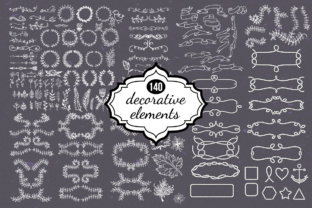
When you are working on a project that requires a bit of "life" or a tangible human touch, standard geometric shapes often feel too cold. You need something that feels organic, textured, and hand-crafted. This is where a comprehensive asset library like 140 Decorative Elements becomes an essential part of your design toolkit. It isn't just a random collection of shapes; it is a curated set of hand-drawn illustrations designed to bridge the gap between digital precision and artistic imperfection.
The set is built around the aesthetic of hand-drawn artistry. Unlike vector assets that feel sterile and machine-made, these elements carry the subtle irregularities and nuances of a human hand. The visual personality is versatile, leaning towards a bohemian, rustic, or vintage charm, but capable of fitting into modern minimalist layouts when used with restraint. Whether you are looking for ornate flourishes, organic botanicals, or textured geometric shapes, the library provides a cohesive visual language. The appeal lies in its ability to add warmth and depth to a project instantly. It feels authentic, which is a quality highly prized in today’s visual culture.
Practical Applications: From Branding to Packaging
Understanding where to deploy these assets is key to maximizing their value. As a designer or business owner, you need to know that the 140 Decorative Elements collection is not limited to one niche. Because the package includes high-resolution EPS, AI, PSD, and PNG files, you have the flexibility to use them across almost any medium.
Brand Identity and Logo Design
When building a brand identity, consistency is everything. These decorative elements are perfect for creating a visual system. You might use a specific floral motif from the set in a logo design, and then repeat that same motif—perhaps at a lower opacity or in a different color—as a background texture on a website or a watermark on stationery. This creates a subconscious connection for the audience, reinforcing brand recognition. The hand-drawn nature of the elements is particularly effective for brands in the wellness, lifestyle, artisanal food, or boutique retail sectors.
Editorial and Publishing
In editorial design, whitespace is valuable, but so is visual hierarchy. These elements act as excellent "furniture" for your layouts. You can use them as chapter headers, end-marks, or sidebar decorations in a magazine or e-book. For bloggers and content creators, using these assets as social media graphics can significantly increase engagement. A quote card on Instagram becomes far more shareable when framed by delicate, hand-drawn botanicals. It moves the design from a standard template to something that feels custom-made.
Packaging and Physical Products
For entrepreneurs involved in packaging design, this collection is a goldmine. The vectors are scalable, meaning you can enlarge a single element to cover a box flap or shrink it down for a label detail without losing quality. Imagine a coffee bag or a candle label; the textured, organic feel of these illustrations immediately communicates a sense of craft and quality to the consumer before they even read the copy.
Strategic Impact on Visual Communication
Choosing the right design assets influences more than just the "look" of a project; it affects how the message is received. The 140 Decorative Elements set can profoundly impact visual hierarchy and audience engagement. By placing a decorative frame around a Call to Action (CTA) button on a website, you draw the viewer’s eye directly to the conversion point. It is a psychological trick: the brain is drawn to contrast, and the organic lines of a hand-drawn element contrast beautifully against the rigid grid of a modern web layout.
Furthermore, using these elements helps in establishing a professional tone. Generic clip art is easily recognizable and often cheapens a brand's perception. Conversely, using a premium, cohesive set of illustrations signals that the creator cares about the details. It suggests a level of investment in the aesthetic that customers associate with quality service or products. It builds trust.
Getting the Most Out of Your Files
The technical versatility of this package is one of its strongest selling points. You aren't locked into a single workflow. If you are a vector purist using Adobe Illustrator, you can open the .EPS or .AI files (version 10 and above) to scale, recolor, and manipulate the anchor points to your heart's content. This is ideal for logo design or large-format printing where infinite scalability is required.
If your workflow is raster-based, perhaps for social media graphics or photo manipulation, the included Photoshop files are invaluable. The .PSD files come on transparent backgrounds, allowing for easy layering. Even better, the package includes 104 individually saved transparent .PNG files. This is a massive time-saver for those who don't want to spend hours cutting out paths. You can simply drag and drop these PNGs into Canva, Procreate, or InDesign and start designing immediately.
When integrating these elements into your work, consider your font pairing. Since these decorative elements have a distinct handwritten font or vintage personality, they pair best with typefaces that complement that vibe without competing for attention. A clean, bold sans serif font can provide excellent contrast, grounding the organic illustrations. Alternatively, pairing them with a classic serif font can amplify a vintage, editorial feel. Avoid pairing them with overly ornate or complex script fonts, as the visual noise can become overwhelming and hurt readability.
Final Considerations for Creative Pros
Before diving into a project, take a moment to evaluate the fit. While 140 Decorative Elements are incredibly versatile, they are stylistic. They work best when the goal is to evoke emotion, warmth, or a sense of the "human touch." If you are designing for a hyper-futuristic tech startup, these might not be the right choice. However, for the vast majority of projects involving storytelling, lifestyle, or craftsmanship, they are perfect.
Always check the commercial licensing if you are using these for client work or products for sale to ensure you are covered. But given the breadth of the package—4000x4000 pixels at 300dpi